
Olive the Boston Terrier thought she was just going to the dog park for a good sniff and a zoomie. She had no idea a tiny grass seed was about to cause a very big drama.
Nine-year-old Olive was at the dog park with her owner, Katrina, having fun, playing, exploring, sniffing and investigating. Out of nowhere, she started sneezing. Her owner thought she may have seen her breathe something up her nose, but couldn’t be sure. And the sneezing didn’t seem to be stopping – it was a ‘sneezing fit’ and Olive was struggling to stop.
Olive was brought into our clinic to see the team at Mowbray, where, of course, her sneezing stopped on arrival. On examination Olive looked calm and alert, with a little bit of discharge from her left nostril. We couldn’t see anything up her tiny nostrils in the consult room, but it was possible something could be trapped higher up in her nasal passages. A scope was offered (camera to look up her nose) under an anaesthetic.
As Olive had settled and wasn’t sneezing, the ‘wait and see’ approach was chosen first. Antiinflammatories were prescribed in case of an irritation/allergy up her nose and she went home with careful monitoring by her mum. However when the intermittent sneezing kept on going over the next 2 days, Olive was brought back for a scope. Katrina had decided that it was time to dig deeper (literally) to find out what the cause was for Olive’s ongoing intermittent sneezing fits.
When “wait and see” wasn’t enough Katrina brought Olive in to see our team at Mowbray Veterinary Clinic. On examination, a scope (camera) was offered straight away to check if something was hiding up her nose, but because Olive had calmed down, we started more conservatively with anti-inflammatories and close monitoring at home.
Olive returned to the clinic and an endoscopic examination of Olive’s nose was performed to see whether something was lodged inside her nostril.
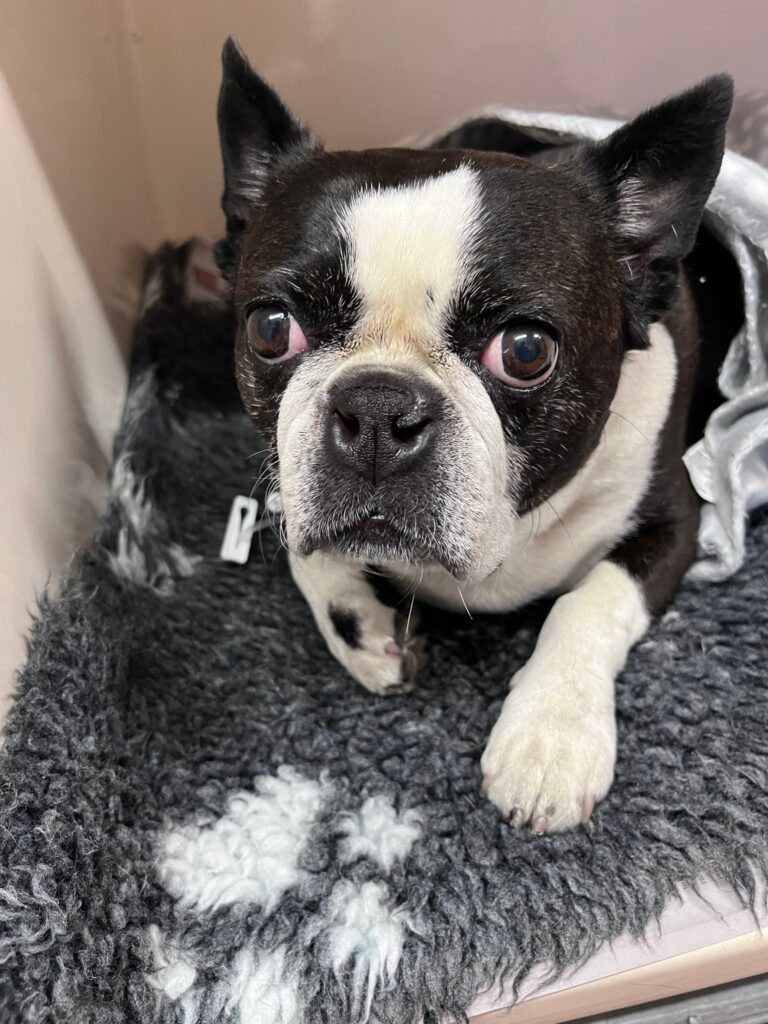
The 3cm surprise in Olive’s nose:
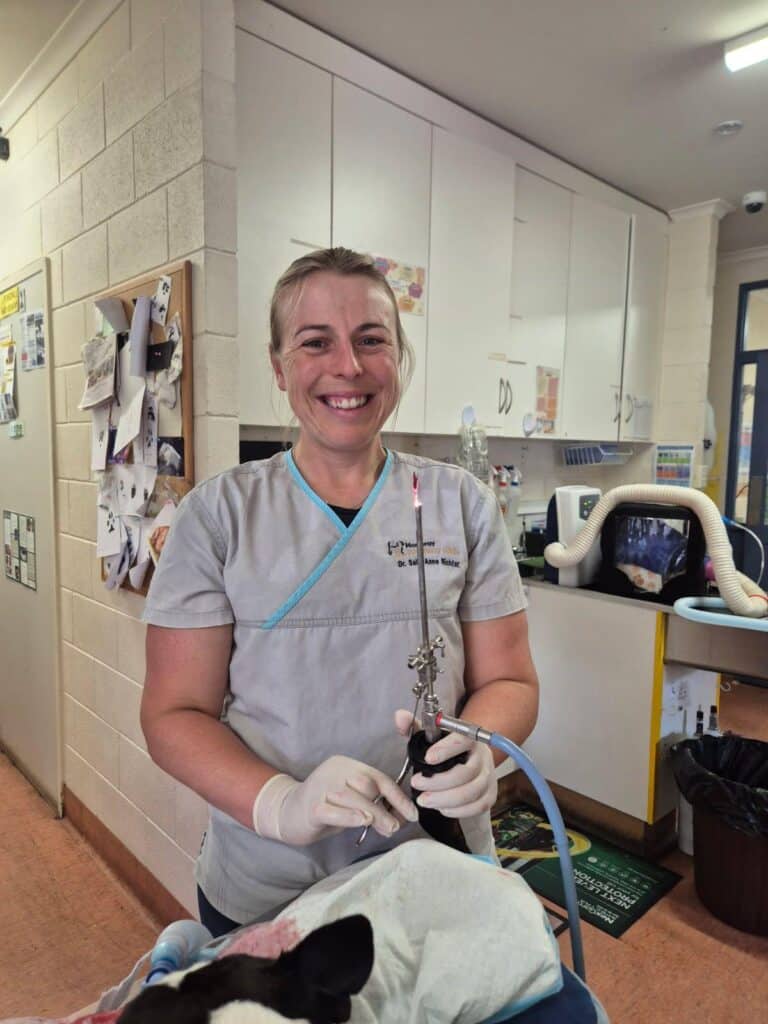
Olive came in for her procedure with Dr Sally Anne. Under a general anaesthetic, a rigid endoscope with a small camera attached was carefully passed into Olive’s nasal passages so we could see exactly what was going on.
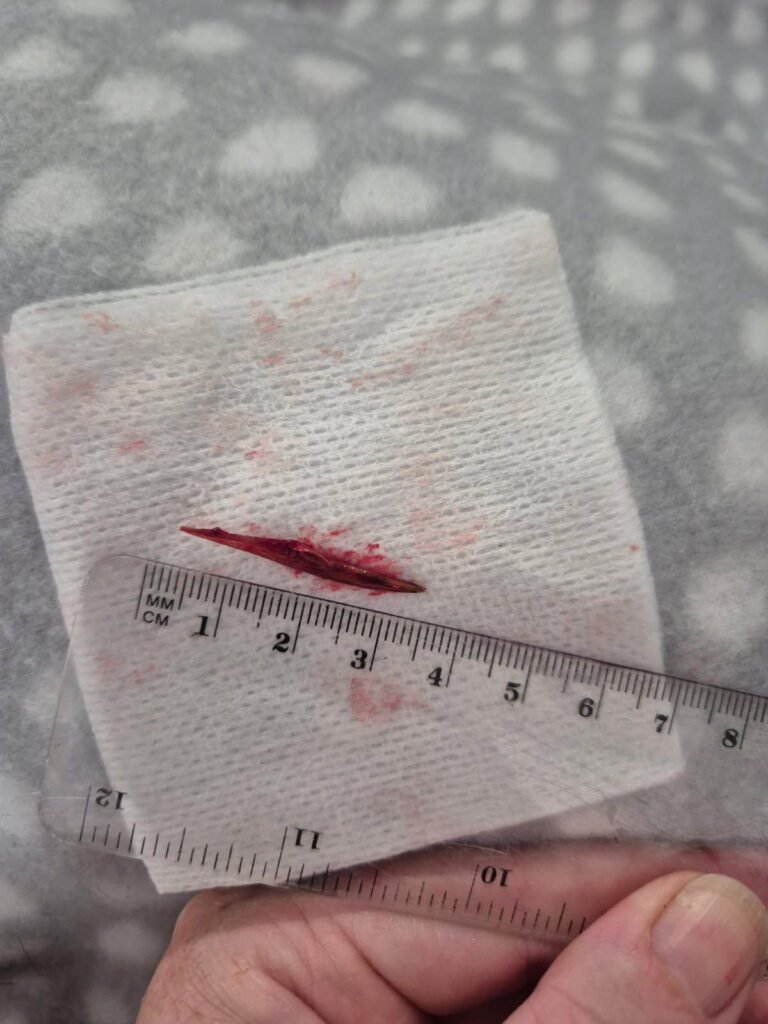
Little Boston Terriers have very narrow airways, which makes this kind of procedure tricky and delicate. What the camera revealed was astonishing – a 3 cm grass seed buried deep up Olive’s left nostril.
Using fine biopsy forceps, Dr Sally Anne was able to gently grasp the seed and remove it under video guidance. As soon as that sharp little passenger was out, Olive was far more comfortable and has been much happier since.
Why grass seeds are such a big deal
Olive’s story is a classic example of how something as small as a grass seed can cause a lot of trouble. Grass seeds (also called grass awns) are designed to travel, their barbed, arrow-like shape helps them latch on and work their way forwards, not backwards. Once they attach to fur or get inhaled, they tend to keep migrating deeper into the body.
They don’t just get stuck up noses. Grass seeds can lodge:
In ears (causing head shaking, ear pain, and infections)
Under the skin, especially between toes, in armpits, along the belly, or in the groin.
In eyes (leading to redness, squinting, and discharge)
Around the prepuce in male dogs and vulva in female dogs
Because they can burrow, they sometimes travel into the chest or abdomen, causing serious infections and abscesses that can be very difficult to find and treat.
They can also introduce bacteria or spores, which may lead to infections or diseases in extreme circumstances.
What Olive wants you to know about grass seeds
If Olive could talk, she’d probably say she’d like to keep sniffing the world – just without any more 3 cm souvenirs in her nose.
Here are some practical tips to reduce the risk of grass seeds for your dog:
Check your dog after every walk – after playing at the park, trails, or in long grass, run your hands over your dog’s whole body and look in high-risk areas: between the toes, under the armpits, along the belly, around the groin, in and around the ears, and around the nose and lips.
Keep coats and feet clipped or brushed regularly, especially during Summer – long-haired dogs are especially prone to grass seeds getting tangled in their fur or in between their toes
Avoid long, seeding grass where possible. The highest risk areas are long, dry grasses that have gone to seed, often in summer and early autumn. Where it is possible, stick to mowed lawns, maintained parks, and clear tracks during peak grass seed season.
Watch for early warning signs
See your vet promptly if you notice:
Sudden, repeated sneezing or a violent sneezing fit, especially after being in long grass.
Pawing at the nose or face.
Nosebleeds or nasal discharge from one side.
Persistent licking at one spot on the skin, a sore lump, or a weeping hole.
Sudden limping, head shaking, red or squinty eyes, or a painful ear.
Don’t try to dig a seed out yourself
Because grass seeds can be sharp and can break, attempting to remove them at home can push them deeper or leave fragments behind.
If you suspect a grass seed, especially in the nose, ear, or eye, a veterinary examination – and sometimes sedation or anaesthesia with proper equipment is the safest option.
Olive’s happy outcome is thanks to Katrina listening to her instincts when something didn’t seem right.
If your dog suddenly develops unexplained sneezing, discomfort, or persistent licking or shaking after a run in the grass, we’re here to help you find the hidden culprit before it causes bigger problems.