Bringing your pet on a trip with you can be great, but it does take a bit of planning. What feels like a normal trip for you can be a big change for them, especially if they’re not used to travelling.
Here is our guide for pet owners to offer some tips for travelling with Pets.
A few small things done in advance can make the whole experience a lot smoother.
Travelling with Pets: Before You Go
Before getting into the details, it’s worth thinking about how your pet usually reacts to new situations.
Some pets are very easy going, others take longer to settle. If they haven’t travelled much before, even a couple of short drives beforehand can help them get used to it.
Travelling with Pets: The Essentials
Make sure their ID tag is secure and easy to read, and that your contact details are up to date if they’re microchipped.
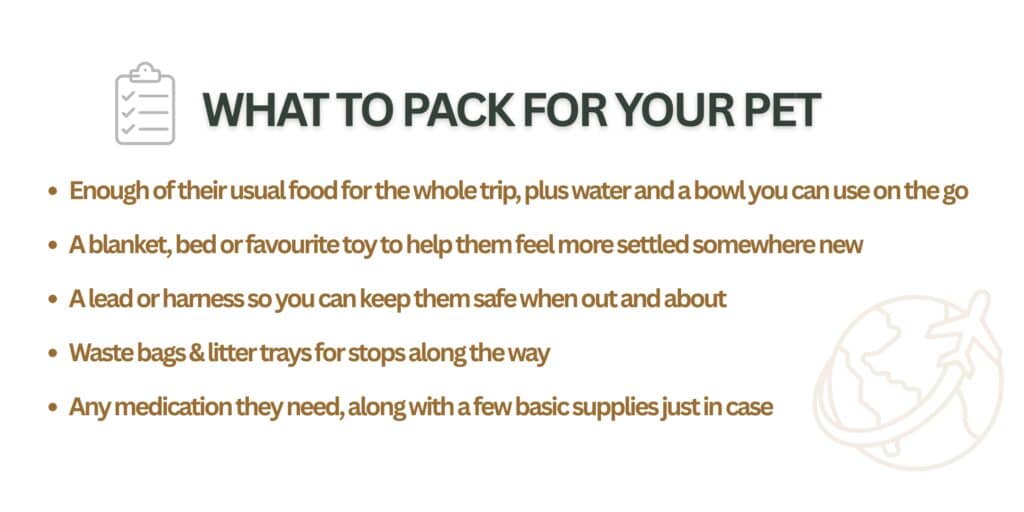
It also helps to pack a few familiar things. Their usual food, a lead or carrier, any medication and something that smells like home like a blanket or toy. These small things can make a big difference.
Travelling with Pets: During the Journey
If you’re travelling by car, make sure your pet is safely secured rather than loose. Dogs can get a speical harnesses that attach to your car seatbelt. For cats and pocket pets, a carrier is recommended that can be fastened with a seatbelt. It’s safer for everyone, especially if your car is unfortunately involved in an accident.
On longer journeys, stop every couple of hours so they can stretch, drink water and go to the toilet.
Even if it doesn’t feel that warm, avoid leaving your pet in your car unattended. Temperatures in cars can rise quickly and dogs are highly susceptible to overheating, which can result in dehydration, seizures and death.
If you’re flying, it’s worth checking the airline’s requirements early, so there are no surprises. Letting your pet spend some time in their crate beforehand can also help them feel more comfortable on the day.
Try to keep things as calm as possible before and during travel. Pets tend to pick up on your energy more than you realise. If your pet is highly anxious, we recommend a consultation with one of our vets to discuss further options which may include medication.
Travelling with Pets: When You Arrive
Arriving at a new place is often frightening and takes a lot of adjustment.
Set up a small, familiar space with their bed or blanket and let them explore gradually. Some pets will settle in quickly; others might need more time.
Keep a routine – regular feeding times and walks can help them adjust more quickly. Be patient. Settling in to their new environment can take days or even weeks.
Travelling with your pet doesn’t need to be complicated. Most of it comes down to keeping things familiar and thinking a step ahead.
Once they’re comfortable, you can relax and enjoy the trip too!